Clermont County serves as the center for probate matters involving wills, estates, guardianships, trusts, and inheritance proceedings filed within the county. The probate court handles legal records related to estate administration, asset distribution, fiduciary appointments, and guardianship responsibilities. Residents, family members, attorneys, and researchers often review probate filings to verify estate activity, review court actions, and locate records connected to deceased persons. These court documents provide valuable details about probate proceedings and related legal matters.
Clermont County maintains probate records that document estate settlements, will filings, guardianship cases, trust administration, and other matters handled by the court. Many records contain information about heirs, executors, beneficiaries, court orders, and estate assets submitted during probate proceedings. Publicly available filings can assist with family history research, legal verification, property-related matters, and inheritance questions. Probate court records remain an important source of information for those seeking details about estate cases and court-supervised proceedings within the county.
How to Search the Probate Court Records
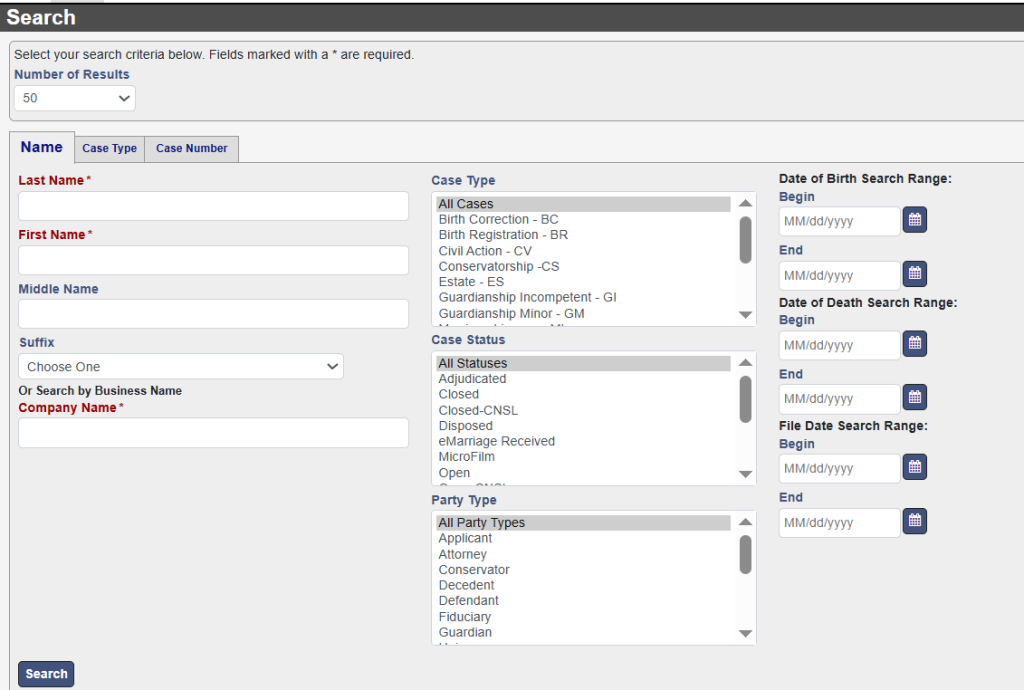
Clermont County Probate Court Records can be searched online through the official Probate Case Access system. Users can locate estate cases, wills, guardianships, trusts, adoptions, name changes, and other probate filings through Clermont County Court record resources by entering case details or party information.
Search by Decedent Name
A decedent name search helps users locate probate cases connected to a deceased person. This method is commonly used for estate administration, inheritance matters, will filings, and beneficiary research. Entering the full legal name often produces more accurate results and helps narrow matching records within the Clermont County Probate Court Records system.
Steps:
- Select the Name Search tab.
- Enter the decedent’s first and last name.
- Add a middle name if available.
- Click Search.
- Review matching probate cases.
- Open the appropriate court file.
Search by Case Number
A case number search is often the quickest way to find a specific probate court record. Each probate filing receives a unique case number when submitted to the court. Users who already have this information can locate records faster and avoid reviewing multiple search results.
Steps:
- Open the Case Number Search tab.
- Enter the complete probate case number.
- Click Search.
- Review the matching case.
- Open the case details page.
Search by Estate Name
Estate name searches help locate probate proceedings associated with a particular estate. This option is useful when a case number is unavailable but the estate name is known. Search results may include estate administration records, executor appointments, inventories, and court orders related to probate proceedings.
Steps:
- Select the Name Search option.
- Enter the estate name.
- Submit the search request.
- Review matching estate records.
- Open the relevant probate case.
Search by Guardian or Ward Name
Guardianship records can often be found using the name of a guardian or ward. The Probate Court handles legal matters involving minors and protected adults, making this search option valuable for locating guardianship appointments, annual reports, accountings, and court reviews.
Steps:
- Open the Name Search tab.
- Enter the guardian’s name or ward’s name.
- Click Search.
- Review matching guardianship cases.
- Select the desired court record.
Search by Filing Date
A filing date search helps users find probate records submitted during a specific period. This method works well for reviewing recent court activity or locating historical probate filings. Combining a date range with another search filter often produces more targeted search results.
Steps:
- Enter a Begin Date.
- Enter an End Date.
- Select a case type if desired.
- Click Search.
- Review all matching filings.
Search Filters Available
The Probate Court Records Search system includes several filters that help users narrow large result sets. Using multiple search criteria can improve accuracy and make it easier to locate the correct probate case, estate record, guardianship filing, or court docket entry.
Available Filters:
- Case Number
- Party Name
- Estate Name
- Filing Date
- Case Status
- Case Type
- Action Code
Information Found in Search Results
Search results provide key details about probate proceedings and court activity. The information displayed varies by case type but often includes case identifiers, filing dates, party information, and docket activity. Some court documents may require a separate records request through the Probate Court.
Records May Include:
- Case Number
- Case Title
- Filing Date
- Case Status
- Party Names
- Attorney Information
- Hearing Dates
- Docket Entries
- Court Actions
- Probate Case History
Types of Probate Records
Probate records in Clermont County, Ohio, include many types of court files related to estates, wills, guardianships, trusts, conservatorships, adoptions, and name changes. These records help document legal proceedings handled by the Probate Court and provide information about court actions, probate documents, estate matters, fiduciary appointments, and other case-related activities.
The Probate Court maintains a wide range of probate case files that support estate settlement, protection of minors and incapacitated adults, trust administration, and other legal matters. Depending on the case type, records may contain petitions, court orders, inventories, accountings, hearing information, and final judgments created during the probate process.
Wills and Testament Records
Wills and testament records contain documents submitted to the Probate Court to establish a person’s final wishes regarding property distribution after death. These probate documents often include the last will and testament, applications to admit the will to probate, notices to heirs, executor appointments, and court orders. Wills records play an important role in estate proceedings by helping determine beneficiaries, identifying fiduciaries, and documenting how assets are transferred according to the terms approved by the court during probate administration.
Estate Administration Records
Estate administration records document the legal process used to settle a deceased person’s estate under court supervision. These probate case files often contain petitions to open an estate, executor records, asset inventories, creditor notices, distribution reports, and final accountings. Estate proceedings help track the collection and management of assets, payment of debts, and transfer of property to beneficiaries. Court filings created during estate administration provide a detailed record of actions taken throughout the probate process until the estate is officially closed.
Guardianship Records
Guardianship records involve cases where the Probate Court appoints a person to manage the personal, medical, or financial affairs of another individual. Legal guardianship records commonly include appointment orders, annual reports, financial accountings, medical evaluations, and court review filings. These records help document the responsibilities of guardians and the court’s ongoing supervision of guardianship cases. Guardianship proceedings may involve minors, elderly adults, or persons who are unable to manage their own affairs without legal assistance and court oversight.
Trust and Conservatorship Records
Trust administration and conservatorship records involve the management and protection of assets placed under legal supervision. These probate documents may include trust agreements, trustee appointments, conservatorship filings, financial reports, court approvals, and final distributions. Trust administration records help document how assets are managed for beneficiaries according to legal requirements and court orders. Conservatorship filings record actions taken to protect property and finances when a person requires assistance managing financial matters through a court-authorized arrangement.
Name Change and Adoption Records
Name change and adoption records are maintained by the Probate Court for proceedings that require judicial approval. Probate court filings in these matters may include petitions, supporting documentation, hearing notices, background information, court reviews, and final orders. Adoption proceedings create legal parent-child relationships recognized by law, while name change cases establish official changes to a person’s legal identity. These records document each stage of the process and provide a permanent court record of the approved action and final judicial decision.
Probate Cases in Clermont County
Probate cases in Clermont County involve court-supervised proceedings related to estates, wills, guardianships, trusts, and other matters assigned to the Probate Court. These estate proceedings follow a structured probate process that helps manage assets, resolve legal obligations, protect beneficiaries, and document court actions from the initial filing through final case closure.
The Probate Court reviews probate filings to confirm legal requirements are met and to oversee the proper administration of estates and related matters. Depending on the circumstances, a probate case may involve executor appointments, asset inventories, creditor claims, beneficiary distributions, trust administration, or guardianship responsibilities. Each case moves through several stages before the court issues a final order and closes the proceeding.
Opening a Probate Case
A probate case begins when an interested party files the required documents with the Probate Court. Probate filings often occur after a person’s death and may include a will, an application to open an estate, or petitions related to guardianships and trusts. The court reviews the submitted paperwork to establish the case and determine the appropriate legal authority for moving forward. During this stage, the court may appoint an executor, administrator, guardian, or fiduciary responsible for handling the matter.
Court Review
After a probate case is opened, the court reviews filings and monitors the administration process. This review helps verify that legal requirements are being followed and that fiduciaries are fulfilling their responsibilities. Probate proceedings may involve examining inventories of assets, reviewing financial reports, approving transactions, resolving disputes, and issuing court orders when necessary. The Probate Court maintains oversight throughout the case to help protect the interests of beneficiaries, heirs, creditors, and other parties connected to the proceeding.
Distribution Process
The distribution process occurs after debts, expenses, taxes, and other legal obligations have been addressed. During this stage of the probate process, estate assets are transferred according to the terms of a valid will or applicable state law. Estate proceedings may involve distributing real property, financial accounts, personal belongings, and other assets to beneficiaries or heirs. The executor or administrator must provide documentation showing how assets were handled before the court approves the final distribution.
Case Closure
A probate case reaches closure when all court requirements have been satisfied and the administration process is complete. Final reports, accountings, and supporting records are submitted for court review before the case can be closed. Once approved, the Probate Court issues orders that formally conclude the estate proceedings or related probate matter. Case closure signifies that assets have been distributed, responsibilities have been fulfilled, and the court-supervised administration process has been completed according to applicable legal procedures.
Clermont County Estate Records
Estate records document the legal administration of a deceased person’s property, assets, debts, and beneficiary interests through the Probate Court. These records help track estate administration activities, executor responsibilities, estate inventory filings, creditor claims, and the final settlement of estate proceedings.
Estate records are an important part of the probate process and provide a record of actions taken during court-supervised administration. Depending on the case, records may include executor appointments, estate inventories, financial reports, creditor notices, beneficiary information, and distribution documents filed throughout the administration period.
Executor Appointments
Executor appointments are among the first actions recorded during estate administration. The Probate Court appoints an executor to manage the estate and carry out responsibilities required under probate law. Estate records related to executor appointments often contain court orders, applications, fiduciary information, and documents granting legal authority to act on behalf of the estate. In some cases, related filings and proceedings may also intersect with Municipal Court matters involving estate-related disputes or obligations. These records help establish who is responsible for handling assets, paying debts, communicating with beneficiaries, and completing the probate process from beginning to end.
Executor duties may include:
- Collecting estate assets
- Managing estate property
- Paying valid debts and expenses
- Filing required probate documents
- Communicating with beneficiaries
- Completing estate settlements
Estate Inventory Filings
Estate inventory filings provide a detailed account of the assets owned by the deceased person at the time of death. These filings are submitted to the Probate Court as part of estate administration and help determine the value of property included in the estate. Estate records may list real estate, bank accounts, investments, personal belongings, vehicles, and business interests. The inventory serves as an official court record that supports probate filings, assists beneficiaries, and helps the court review the administration of estate assets.
Estate inventories may include:
- Real property
- Financial accounts
- Investment holdings
- Vehicles
- Personal property
- Business interests
- Valuable collections
Creditor Claims
Creditor claims are filed during probate proceedings when a person or business seeks payment for debts owed by the deceased. These claims become part of the estate records and help document outstanding financial obligations that must be addressed before assets are distributed. The Probate Court may review disputed claims and determine whether they should be paid through the estate. Creditor claim records provide valuable information about liabilities, payment requests, claim resolutions, and actions taken during court-supervised administration.
Common creditor claims include:
- Medical bills
- Credit card balances
- Personal loans
- Tax obligations
- Utility bills
- Business debts
Estate Distribution Records
Estate distribution records document the transfer of estate assets to heirs, beneficiaries, or other entitled parties after debts and expenses have been resolved. These records are an important part of estate settlements and show how property was distributed according to a valid will or applicable probate laws. Probate filings related to distributions often include accounting reports, beneficiary records, receipts, and court approvals. Distribution records help demonstrate that estate administration duties have been completed before the Probate Court closes the proceeding.
Clermont County Will Records and Probate Filings
Wills and probate filings are among the most frequently requested records maintained by the Probate Court. These records document a deceased person’s final wishes, estate administration activities, court proceedings, and legal actions required to transfer assets through the probate process.
Will records and probate filings provide valuable information about estate matters, beneficiaries, executors, and court-supervised administration. Depending on the case, records may contain testamentary documents, probate petitions, court orders, notices, inventories, and other filings submitted during estate proceedings. These records help create an official history of the probate process from the initial filing through final resolution.
When Wills Become Public
A will typically becomes part of the court record after it has been submitted to the Probate Court following the death of the person who created it. During probate proceedings, the court reviews the document and adds it to the case file along with related probate filings. Public will records can provide information about beneficiaries, executor designations, inheritance instructions, and estate administration matters. Availability may vary depending on court rules, record restrictions, and the status of the probate case under review.
Probate Filing Requirements
Probate filing requirements establish the documents and information needed to begin estate proceedings before the Probate Court. Probate filings often include a probate petition, original will, death certificate, fiduciary forms, and notices required by law. These records help the court verify the validity of the filing and determine the appropriate next steps in estate administration. Complete and accurate submissions help prevent delays and create an official record that supports court-supervised administration throughout the probate process.
Common probate filings may include:
- Probate petition
- Original will
- Death certificate
- Executor application
- Estate inventory forms
- Notice to beneficiaries
- Court-required affidavits
Court Review Process
The court review process begins once probate filings have been submitted and accepted for processing. During this stage, the Probate Court examines testamentary documents, reviews will validation requirements, and determines whether the estate can proceed through administration. The court may approve executor appointments, review estate inventories, address legal objections, and issue orders related to estate management. This review helps create a clear record of court actions and supports the lawful distribution of assets according to the will or applicable probate laws.
Court review may involve:
- Will validation
- Executor appointment review
- Estate inventory examination
- Beneficiary notifications
- Court orders and approvals
- Probate case monitoring
Guardianship Records in Clermont County Probate Court
Guardianship records document court proceedings involving the appointment and supervision of guardians responsible for caring for minors or adults who cannot fully manage their personal or financial affairs. These guardianship cases create official records that track appointments, court reviews, guardian responsibilities, ward records, and ongoing reporting requirements established by the Probate Court. Guardianship records are maintained to document decisions affecting the welfare, property, and legal interests of protected persons. Depending on the case, records may include petitions, appointment orders, financial accountings, annual reports, medical evaluations, and court rulings. These files provide a detailed history of actions taken during the guardianship proceeding and help maintain court oversight throughout the life of the case.
Guardianship of Minors
Guardianship of minors occurs when the Probate Court appoints a responsible adult to care for a child whose parents are unable to provide care or legal supervision. Minor guardianship records often contain petitions for appointment, background information, court orders, consent forms, and reports related to the child’s welfare. These guardianship cases help establish legal authority for decisions involving education, healthcare, housing, and financial matters. Court records document each stage of the proceeding and provide an official history of actions taken on behalf of the minor.
Adult Guardianship Cases
Adult guardianship cases involve individuals who are unable to manage personal, medical, or financial responsibilities without assistance. The Probate Court reviews evidence and determines whether a guardian should be appointed to protect the person’s interests. Guardianship records may contain medical evaluations, appointment orders, financial reports, ward records, and court review documents. These cases often require continued court supervision to monitor the guardian’s performance and confirm that decisions are being made in the best interests of the protected adult.
Annual Guardian Reporting Requirements
Annual guardian reporting requirements help the Probate Court monitor guardianship cases after a guardian has been appointed. Guardians are generally required to submit reports that provide information about the ward’s condition, living arrangements, financial status, and services received during the reporting period. Guardian reports become part of the official court record and allow the court to review ongoing compliance with legal responsibilities. These filings help maintain accountability, support court oversight, and document important developments throughout the guardianship proceeding.
Inheritance Records and Beneficiary Information
Inheritance records document the transfer of assets, property, and financial interests from a deceased person to heirs or beneficiaries through the probate process. These records help establish beneficiary rights, identify heirs at law, and create an official record of inheritance proceedings reviewed by the Probate Court.
Inheritance records are commonly found within estate files and probate case records. Depending on the circumstances, these records may include wills, beneficiary designations, court orders, distribution reports, heirship information, and other documents related to the settlement of an estate. The Probate Court maintains oversight of these proceedings to help verify that assets are distributed according to applicable laws and valid estate planning documents.
How Inheritance Records Are Created
Inheritance records are created throughout the probate process as estate proceedings progress from the initial filing to the final settlement of assets. These records often begin with probate petitions, death-related filings, and documents submitted to open an estate. As administration continues, additional records such as estate inventories, executor reports, creditor claim resolutions, beneficiary notices, and distribution filings become part of the court file. Together, these documents create a complete record of inheritance proceedings and provide evidence of how estate assets were managed and transferred.
Inheritance records may include:
- Probate petitions
- Estate inventories
- Executor reports
- Beneficiary notices
- Distribution records
- Court orders
- Final settlement documents
Beneficiary Rights
Beneficiaries are entitled to certain rights during estate administration and inheritance proceedings. Beneficiary records help identify individuals named in a will or those who qualify as heirs at law under applicable probate laws. During the administration process, beneficiaries may receive notices regarding estate activities, distributions, and court proceedings affecting their interests. These records help document participation in the probate process and create transparency regarding how estate assets are managed, reviewed, and distributed through court-supervised administration.
Beneficiary rights may involve:
- Receiving required notices
- Reviewing certain probate filings
- Obtaining distribution information
- Participating in court proceedings
- Receiving inheritance distributions
- Raising objections when permitted by law
Court Oversight
The Probate Court maintains oversight of inheritance proceedings to help verify that estate administration complies with legal requirements and court orders. During the review process, the court may examine estate inventories, monitor executor actions, review beneficiary records, approve distributions, and address disputes involving heirs or interested parties. Court oversight helps create an official record of estate activities and supports fair administration throughout the probate process. This supervision continues until all obligations have been satisfied and the estate is ready for final settlement and closure.
Are Clermont County Probate Court Records Public?
Many Clermont County Probate Court records are available to the public under Ohio court records laws. Public probate records often include estate files, wills admitted to probate, court orders, case dockets, guardianship filings, and other documents maintained by the Probate Court, though some records may be restricted by law or court order.
Ohio court records generally support public inspection of many probate proceedings to promote transparency within the judicial system. At the same time, certain records contain sensitive information that may be protected from public disclosure. The level of public availability depends on the type of case, the information contained in the record, and applicable confidentiality requirements established by state law and court rules.
Publicly Accessible Records
Many probate court records are publicly accessible and can be reviewed through court record systems or by requesting files from the Probate Court. Public probate records often include estate administration cases, probate filings, wills admitted to probate, executor appointments, estate inventories, court orders, hearing information, and case docket entries. These records help provide information about probate proceedings and estate administration activities. Public access laws support transparency by allowing interested parties to review many court records while maintaining an official record of probate matters handled by the court.
Examples of public probate records include:
- Estate administration records
- Wills admitted to probate
- Court docket entries
- Executor appointment records
- Estate inventories
- Court orders
- Hearing schedules
Restricted or Sealed Probate Records
Some probate court records are restricted or sealed and may not be available for public inspection. These limitations are intended to protect sensitive information, vulnerable persons, and confidential court matters. Certain guardianship records, adoption proceedings, mental health matters, financial account details, and records sealed by court order may have limited public availability. Record confidentiality requirements vary depending on the nature of the case and applicable legal standards. Access to restricted records is typically limited to authorized parties, attorneys, court personnel, or persons granted permission by the court.
Records that may be restricted include:
- Adoption records
- Sealed court files
- Certain guardianship documents
- Mental health proceedings
- Confidential financial information
- Protected personal identifiers
Privacy Considerations
Privacy considerations play an important role in balancing public access laws with the protection of personal information contained in probate court records. Probate filings may include financial details, family relationships, medical information, addresses, and other sensitive data that require careful handling. Ohio court records policies and court procedures help determine which information may be viewed by the public and which details must remain confidential. These protections help preserve privacy interests while allowing public access to appropriate probate court records and judicial proceedings.
Clermont County Probate Court Fees and Filing Costs
Clermont County Probate Court charges specific filing fees for probate matters such as estate administration, guardianships, trusts, adoptions, and name changes. These probate filing fees are collected when documents are submitted and represent the initial court costs required to open or process a case. Probate expenses vary based on the type of proceeding filed with the court. Estate administration cases, releases from administration, guardianships, trust matters, and other probate actions each have separate filing costs. Parties filing probate documents should review the current fee schedule before submitting paperwork since additional costs may apply for certified copies, transcripts, publication notices, and other court services. The Probate Court publishes an official cost deposit schedule that outlines filing fees for probate matters.
Common Probate Filing Fees
The Clermont County Probate Court has established filing fees for many probate proceedings. Current fees include $235 for a Full Estate administration, $95 for a Sole Asset estate, $145 for a Release from Administration, $45 for a Summary Release valued up to $1,000, $85 for a standard Summary Release, $15 for a Will for Record Only, and $25 for an Application to Admit a Will to Probate. These amounts represent the court’s published cost deposits and may be subject to future updates by the court.
Current Estate Filing Fees
| Filing Type | Fee |
|---|---|
| Full Estate | $235 |
| Sole Asset Estate | $95 |
| Release from Administration | $145 |
| Summary Release (up to $1,000) | $45 |
| Summary Release | $85 |
| Will for Record Only | $15 |
| Application to Admit Will | $25 |
Court Costs Associated With Probate Cases
Court costs may extend beyond the initial estate filing fee depending on the nature of the proceeding. Clermont County charges $20 for transcripts plus $1 per page, $75 for medical records requests, $20 for claims against an estate, and $35 to reopen an estate, with certain additional charges applying in some reopened cases. These expenses become part of the overall probate costs and may arise during administration, court review, or record requests made after the case has been filed.
Additional Court Costs
| Service | Fee |
| Transcript Request | $20 + $1/page |
| Medical Records Request | $75 |
| Claims Against Estate | $20 |
| Reopen Estate | $35 |
| Deposit of Will | $25 |
| Designation of Heir | $40 |
Estate Filing Fees and Probate Expenses
Estate administration is often the most common probate proceeding filed with the court. A standard Full Estate currently requires a $235 filing deposit, while smaller estate procedures may qualify for reduced-cost alternatives such as Summary Release or Release from Administration. Probate expenses can increase if the estate requires additional filings, property transfers, certified copies, publication notices, accountings, or other court-approved actions. These costs are commonly paid from estate assets during administration before final distributions are made to beneficiaries and heirs.
Other Probate-Related Fees
| Filing Type | Fee |
| Adult Guardianship | $290 |
| Minor Guardianship | $235 |
| Testamentary Trust | $235 |
| Conservator Proceeding | $80 |
| Minor Adoption | $150 |
| Adult Adoption | $115 |
| Adult Name Change | $130 |
Obtaining Current Fee Information
The Probate Court may revise filing fees and cost deposits over time. For the most current fee information, parties should review the official Clermont County Probate Court Cost Deposits Schedule before filing documents. The court maintains its published fee schedule online and provides information regarding estate filing fees, guardianship costs, trust filings, adoption proceedings, and other probate expenses. Verifying current fees before filing can help prevent delays caused by incorrect payments or outdated fee information.
Frequently Asked Questions (FAQ’s)
The following frequently asked questions cover common topics related to Clermont County Probate Court records, estate administration, guardianship proceedings, wills, inheritance matters, and public probate records. These answers provide detailed information about probate records Clermont County Ohio, court procedures, record availability, and the probate process handled by the Probate Court.
How do I search Clermont County Probate Court records online?
Clermont County Probate Court records can be searched through the court’s online case search system. Users may search by case number, decedent name, estate name, guardian name, ward name, or filing information. The online search portal allows users to review probate filings, estate proceedings, guardianship cases, court actions, and docket activity. Using complete names or a known case number often produces more accurate search results and helps locate the correct probate court record more quickly.
What information is included in probate court records?
Probate court records may contain a wide range of information related to estate administration and court-supervised proceedings. Common records include case numbers, filing dates, court orders, wills, estate inventories, executor appointments, beneficiary information, hearing schedules, and docket entries. Depending on the case type, records may also contain guardianship reports, trust administration documents, creditor claims, and final settlement filings that document the progress and outcome of the probate proceeding.
Are probate records public in Ohio?
Many probate records are public under Ohio court records laws and can be reviewed through online court systems or records requests. Publicly available records often include estate administration files, wills admitted to probate, court orders, case dockets, and certain guardianship filings. Some records are restricted due to privacy concerns, court orders, or statutory confidentiality requirements. Adoption records, sealed court files, and certain guardianship or mental health records may have limited public availability.
Can I access wills through Clermont County Probate Court?
Yes, wills that have been filed with the Probate Court and admitted to probate are often available as part of the public court record. These records may contain the last will and testament, executor information, probate petitions, and court orders related to estate administration. Availability depends on the status of the proceeding and any restrictions imposed by law. Individuals researching family history, estate matters, or inheritance proceedings frequently review will records maintained by the Probate Court.
How do guardianship cases work in probate court?
Guardianship cases begin when a petition is filed requesting the appointment of a guardian for a minor or an adult who requires assistance managing personal, medical, or financial affairs. The Probate Court reviews the evidence and determines whether a guardianship is necessary. Once appointed, the guardian must fulfill legal duties and may be required to submit annual reports, financial accountings, and other filings. The court continues to supervise the case throughout the guardianship proceeding.