Clermont County criminal court records provide information about felony charges, misdemeanor offenses, court hearings, sentencing outcomes, and prosecution activity handled within the county judicial system. These records help residents, legal researchers, employers, and reporters review case details filed through local courts. Criminal court files often contain defendant information, charge descriptions, hearing dates, case status updates, and judicial decisions. Public record searches can support legal research, background screening, and case tracking for matters processed in Clermont County courts.
Clermont County maintains criminal court records that document arrests, criminal complaints, indictments, plea agreements, trial proceedings, and sentencing actions. Court records serve as a valuable source for reviewing case progress and judicial outcomes within the county. Many users search these records to check case filings, verify court appearances, monitor pending criminal matters, or review completed cases. Accurate criminal court information helps support transparency and provides insight into how criminal cases move through the Clermont County justice system.
How to Search Clermont County Criminal Court Records Online
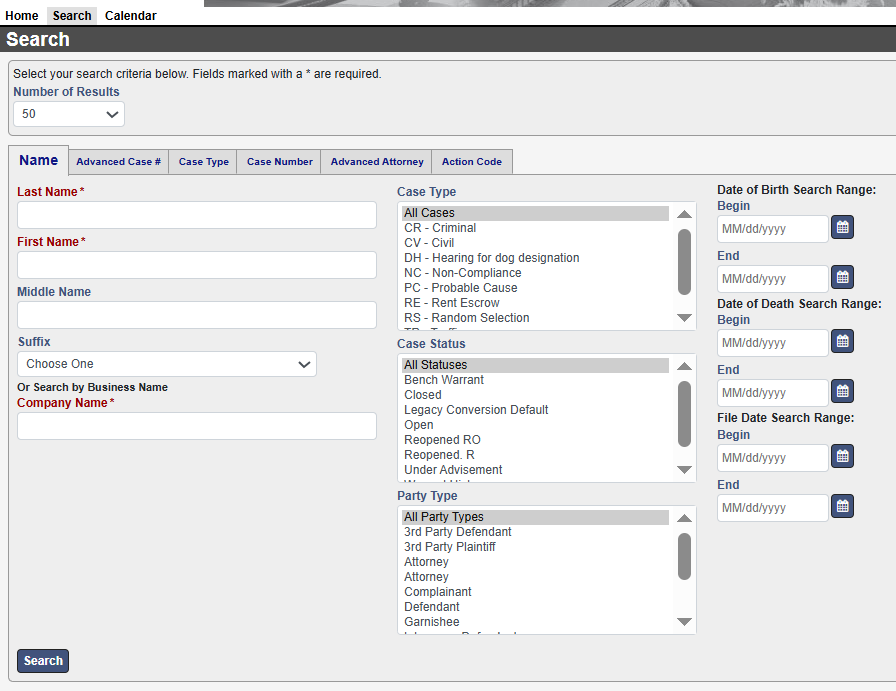
Clermont County Court criminal court records can be searched through the official Clermont County Common Pleas Court case search system. The online search tool allows users to locate criminal filings, review court docket records, check hearing schedules, track case status updates, and search sentencing information from public court records maintained within the Clermont County Court system.
Official Criminal Court Search Tool: https://eservices.clermontclerk.org/commonpleas/search.page.3?x=jtO4pQ9IlGJo-pd4ynNwxQ
Start With the Name Search Section
The Name Search option is the most common method for finding Clermont County criminal court records. Users can search public case information by entering a defendant’s name into the available fields. This search method works well for locating criminal filings, reviewing court activity, and identifying case records when a case number is not available.
Required information may include:
- Last Name
- First Name
- Middle Name (optional)
- Suffix (optional)
Select the Criminal Case Type
The Case Type filter helps narrow search results to specific court categories. Users searching for criminal court records should select the criminal case classification before running a search. This step removes unrelated civil and probate matters from the results and focuses the search on criminal proceedings.
Choose the following option:
- CR – Criminal
Choose a Case Status Filter
The Case Status section helps users locate cases based on their current position within the court system. Applying a status filter can reduce the number of results and make it easier to locate active, pending, or completed criminal cases.
Available status options may include:
- Active
- Closed
- Adjudicated
- Authorized
- Cancelled
- Adult Probation
Use the Party Type Section
The Party Type filter identifies the role of a person involved in a case. This search feature is helpful when multiple people appear in court records and users need to narrow results to defendants or other parties associated with a criminal proceeding.
Common party types include:
- Defendant
- Attorney
- Prosecuting Attorney
- Affiant
- Appellant
Apply Date of Birth Search Filters
The Date of Birth filter helps distinguish between people who have similar names. Users can enter a date range to improve search accuracy and reduce the chances of opening the wrong criminal court record.
Date fields include:
- Begin Date
- End Date
Use File Date Search Filters
The File Date Search Range allows users to search for criminal filings submitted during a specific period. This feature is useful for locating recent court records or reviewing cases filed within a selected year.
Search fields include:
- File Date Begin
- File Date End
Search by Case Number
The Case Number tab provides the fastest way to locate a specific criminal case. Since each court case receives a unique identification number, this search method usually returns the most accurate record available in the database.
Case number searches can reveal:
- Court docket entries
- Criminal charges
- Hearing schedules
- Sentencing records
- Judicial orders
Search by Case Type
The Case Type tab allows users to browse records based on court classifications. This search option is useful for reviewing criminal filings within a specific court division and locating records connected to criminal proceedings.
Common criminal categories may include:
- Criminal
- Criminal Bindover
- Related criminal proceedings
Search by Action Code
The Action Code feature helps users locate records connected to particular court activities. Legal professionals and researchers often use this search option when reviewing specific motions, hearings, orders, or other case events.
Action code searches may identify:
- Motions
- Hearings
- Orders
- Filings
- Court events
Review Search Results
After entering the desired search criteria, users can run the search and review the matching records. The results page typically displays basic case information that helps identify the correct criminal court file before opening the full record.
Results may display:
- Defendant name
- Case number
- Filing date
- Case type
- Court status
Review Criminal Filings and Court Records
Opening a case file provides detailed information about court activity and criminal proceedings. Users can examine filings, court actions, and case history records that document the progress of a criminal matter through the judicial system.
Available documents may include:
- Criminal complaints
- Indictments
- Court motions
- Docket entries
- Judicial orders
- Plea agreements
Track Case Status and Court Activity
Case status tracking allows users to monitor changes as a criminal case moves through the court system. Regular reviews of the docket can help identify scheduled hearings, new filings, and final case outcomes.
Status updates may include:
- Pending
- Active
- Continued
- Closed
- Sentenced
- Dismissed
Search Sentencing Records
Sentencing information becomes available after a criminal case reaches a final decision. These records help users review penalties, probation conditions, fines, and other court-ordered outcomes issued by the court.
Sentencing records may contain:
- Conviction details
- Sentencing date
- Jail terms
- Probation conditions
- Court fines
- Final disposition
Information Available Through the Search Tool
The Clermont County criminal court search tool contains a wide range of public court information. Users can review case details, court filings, hearing schedules, and criminal case activity from one searchable database.
Information commonly available includes:
- Defendant details
- Criminal charges
- Filing dates
- Court appearances
- Attorney information
- Court docket history
- Sentencing outcomes
Tips for Better Search Results
Using accurate information can improve search performance and reduce unrelated matches. Users who combine name searches with filters often find the correct criminal court record more quickly than those using broad search criteria.
Helpful search tips:
- Use full legal names.
- Select CR – Criminal.
- Apply date filters.
- Search by case number when available.
- Check docket updates regularly.
- Review multiple results if needed.
Types of Criminal Cases Handled in Clermont County
Clermont County criminal cases include a wide range of offense proceedings managed through the local court system. These criminal matters cover felony offenses, misdemeanor violations, probation issues, criminal appeals, traffic-related prosecutable violations, and certain matters that may intersect with domestic relations proceedings when criminal allegations arise within family-related legal disputes. Each category follows Ohio criminal law procedures and court rules. The system processes these cases through structured hearings, filings, and criminal litigation steps. Courts handle these public safety cases to review evidence, apply legal standards, and resolve offense-related proceedings within the judicial framework.
Felony Offenses
Felony offenses in Clermont County involve serious criminal charges Ohio law classifies as high-level violations. These cases include violent crimes, major property offenses, drug-related activity, and financial fraud cases. Felony offense proceedings begin with formal charges and may continue through indictments, hearings, and trial preparation. Courts handle these matters through detailed criminal litigation because they carry severe penalties such as long-term imprisonment, heavy fines, and strict supervision conditions depending on the final judgment.
Misdemeanor Offenses
Misdemeanor offenses include lower-level criminal violations that still fall under prosecutable violations in Ohio. These criminal matters often involve minor theft, disorderly conduct, simple assault, and trespassing cases. Courts process misdemeanor offense proceedings faster than felony cases, often using plea agreements, brief hearings, or simplified trials. Penalties may include fines, short jail terms, or probation. Even though these cases are less severe, they still play an important role in maintaining public order and enforcing local laws.
Probation Violations
Probation violations occur when a defendant fails to follow court-ordered conditions after sentencing in a criminal case. These violations may include missing meetings, failing drug tests, committing new offenses, or ignoring supervision rules. Clermont County courts treat these criminal matters seriously because they involve non-compliance with judicial instructions. Judges review each violation based on severity and history before deciding whether to modify probation terms, extend supervision, or impose additional penalties within the criminal justice system.
Criminal Appeals
Criminal appeals involve reviewing earlier court decisions to check whether legal or procedural errors affected the outcome of a case. These offense proceedings do not introduce new evidence but focus on reviewing trial records, legal arguments, and sentencing decisions. Courts examine whether proper procedures were followed during criminal litigation. Appeals may lead to sentence changes, retrials, or affirmation of the original decision depending on the findings of the appellate review process.
Traffic-Related Criminal Offenses
Traffic-related criminal offenses in Clermont County involve serious violations that go beyond standard traffic tickets and fall under criminal charges Ohio courts process. These cases often include DUI or OVI charges, reckless driving, driving under suspension, and hit-and-run incidents. Courts treat these as public safety cases due to the risks involved. Penalties may include fines, license suspension, probation, or jail time depending on severity and repeat violations within the criminal record system.
Felony Cases and Serious Criminal Offenses
Felony cases in Clermont County involve serious criminal charges Ohio law classifies as high-level offenses with severe penalties. These cases include violent crimes, major property offenses, drug-related activity, and financial crimes. Felony prosecution cases follow structured court procedures that begin with formal charging and move through hearings, indictments, and trial proceedings. Courts treat these matters as major offense litigation due to their impact on public safety and long-term legal consequences for defendants.
Violent Crimes and Serious Offenses
Violent crimes represent some of the most serious felony records Clermont County courts process. These cases involve physical harm or threats against individuals and often lead to strict sentencing outcomes. Law enforcement agencies and prosecutors treat these cases as high-priority criminal charges Ohio courts must address through full judicial review and evidence-based proceedings.
Common violent felony offenses include:
- Aggravated assault
- Robbery cases
- Homicide-related charges
- Kidnapping offenses
- Domestic violence felonies
Property Crimes as Felony Offenses
Property crimes become felony-level offenses when financial loss or damage exceeds legal thresholds or involves aggravated circumstances. These cases form a major part of felony prosecution cases and often require detailed investigation and documentation. Courts evaluate evidence, witness statements, and financial records during trial preparation and hearings.
Common property-related felony charges include:
- Burglary cases
- Grand theft offenses
- Arson incidents
- Vandalism with major damage
- Vehicle theft cases
Drug-Related Felony Offenses
Drug-related offenses are among the most frequently prosecuted serious criminal offenses in Clermont County. These cases often involve manufacturing, trafficking, distribution, or possession of controlled substances. Prosecutors rely on evidence such as surveillance, seizures, and forensic reports during felony litigation.
Typical drug felony cases include:
- Drug trafficking charges
- Manufacturing controlled substances
- Large-scale possession cases
- Distribution offenses
- Prescription drug fraud
Financial Crimes and Fraud Cases
Financial crimes classified as felonies involve deception or illegal financial activity that causes significant monetary loss. These major offense litigation cases often require detailed audits, digital records, and investigative reports. Courts review documentation carefully during hearings and trial proceedings to determine guilt and sentencing outcomes.
Legal Process in Felony Prosecution Cases
Felony prosecution cases in Clermont County follow a structured legal process that includes multiple court stages. These proceedings begin with formal charges and continue through hearings, indictments, and trial preparation. Each stage allows both prosecution and defense to present evidence and arguments before the court issues a final judgment.
Arrest Cases and Criminal Charges
Arrest cases in Clermont County often serve as the starting point for criminal court proceedings. After an arrest occurs, law enforcement officers begin arrest-related proceedings that may lead to formal criminal charges Ohio courts review and process. The criminal justice system follows several steps, including booking procedures, charging documentation, prosecution review, and preliminary hearings. Each stage helps determine whether criminal accusations have sufficient legal support to move forward through the court system and become an active criminal case.
Arrest Procedures and Initial Criminal Accusations
An arrest takes place when law enforcement officers believe there is probable cause to suspect a person committed a criminal offense. After the arrest, officers complete reports and gather evidence that becomes part of the official record. These criminal accusations do not automatically result in a conviction or formal prosecution. Instead, the arrest begins a legal process where investigators, prosecutors, and courts review the available facts before determining how the case should proceed.
Booking Procedures Following an Arrest
Booking is the administrative process that occurs after a person is taken into custody. During this stage, law enforcement agencies create official records and document information related to the arrest. The booking process establishes a formal record that may later become part of court filings and charging documentation reviewed during criminal proceedings.
Charging Decisions and Prosecutor Review
After booking, prosecutors review the arrest-related proceedings to determine whether criminal charges Ohio law supports should be filed. Prosecutors examine evidence, police reports, witness statements, and legal requirements before making charging decisions. In some situations, charges may be reduced, expanded, or declined based on the facts presented. This review process helps determine whether a criminal case has enough evidence to proceed through the court system.
Factors considered during charging review include:
- Available evidence
- Witness credibility
- Applicable criminal statutes
- Severity of the alleged offense
- Prior criminal history
Charging Documentation and Court Filings
Charging documentation contains the formal allegations filed against a defendant. These records identify the criminal offenses being prosecuted and become part of the official court file. Courts use this documentation throughout the case to track proceedings, schedule hearings, and maintain records related to criminal litigation.
Common charging documents include:
- Criminal complaints
- Affidavits
- Indictments
- Information filings
- Arrest warrants
Preliminary Hearings and Early Court Proceedings
Preliminary hearings often occur during the early stages of criminal court proceedings. These hearings allow the court to review whether sufficient evidence exists to continue the case. Judges evaluate information presented by prosecutors and determine whether the matter should move forward. Preliminary hearings are not trials and do not determine guilt or innocence, but they play an important role in reviewing criminal accusations and supporting evidence.
How Arrest Cases Move Through the Criminal Court System
Arrest cases Clermont County courts process generally follow a structured sequence from arrest through judicial review. Each stage creates records that become part of the official court file and helps determine the future direction of the case. The process allows prosecutors, defense attorneys, and judges to review evidence and legal issues before reaching a final outcome.
Prosecution Records and Court Proceedings
Prosecution records Ohio courts maintain document the actions taken by prosecutors throughout a criminal case. These records help track legal filings, evidence submissions, plea discussions, court appearances, and case outcomes. Prosecutors represent the government during criminal proceedings and work to establish whether evidence supports the charges filed against a defendant. Criminal court records Ohio residents often review often contain information related to prosecutorial actions, court schedules, motions, and other documents that reflect the progress of a criminal case through the judicial system.
Role of Prosecutors in Criminal Cases
Prosecutors play a central role in managing criminal cases from the filing of charges through final disposition. They review evidence collected by law enforcement, determine appropriate charges, prepare legal filings, and present arguments in court. Prosecutors must evaluate whether available evidence supports the allegations and whether a case should proceed through the court system. Their responsibilities continue throughout hearings, negotiations, and trial proceedings, making them a key participant in the courtroom litigation process.
Common prosecutorial responsibilities include:
- Reviewing police reports
- Filing criminal charges
- Presenting evidence in court
- Examining witnesses
- Responding to defense motions
Legal Case Preparation and Evidence Review
Legal case preparation involves organizing evidence, reviewing investigative materials, and preparing court filings before hearings or trial proceedings. Prosecutors examine witness statements, physical evidence, expert reports, and other records to build the case. This preparation helps establish the facts that may be presented before a judge or jury. Thorough case preparation supports efficient court proceedings and allows prosecutors to address legal issues that may arise during criminal litigation.
Materials often reviewed during preparation include:
- Police reports
- Witness statements
- Forensic evidence
- Surveillance records
- Criminal history information
Plea Agreements and Case Resolution
Many criminal cases are resolved through plea agreements rather than full trials. During plea negotiations, prosecutors and defense attorneys discuss potential resolutions that may avoid lengthy courtroom proceedings. These agreements often involve a defendant pleading guilty to specific charges in exchange for reduced charges or sentencing recommendations. Courts review proposed agreements before acceptance. Plea discussions form an important part of criminal court records Ohio courts maintain and can significantly affect case outcomes.
Plea agreement terms may involve:
- Reduced charges
- Sentencing recommendations
- Dismissal of selected counts
- Probation arrangements
- Restitution agreements
Court Hearings and Pre-Trial Proceedings
Court hearings allow prosecutors to present information, address legal issues, and respond to motions before trial. These proceedings help courts manage case schedules, review evidence-related disputes, and determine whether a case is ready for trial. Prosecutors participate in various hearings throughout the criminal process and must provide supporting documentation when required. Many prosecutorial actions become part of the official court record and remain documented within the case file.
Common pre-trial hearings include:
- Arraignments
- Bond hearings
- Motion hearings
- Preliminary hearings
- Status conferences
Trial Proceedings and Courtroom Litigation Process
When a criminal case proceeds to trial, prosecutors present evidence and witness testimony to support the charges. They must prove the allegations according to the legal standard required by Ohio law. During the courtroom litigation process, prosecutors question witnesses, introduce exhibits, and respond to arguments raised by the defense. Trial proceedings follow established court rules and may involve judges, juries, attorneys, law enforcement officers, and expert witnesses.
Key trial activities include:
- Opening statements
- Witness examinations
- Evidence presentation
- Cross-examination
- Closing arguments
Prosecution Records Found in Criminal Court Files
Criminal court records Ohio courts maintain often contain prosecution-related documents created throughout the case. These records help document legal actions, court decisions, and procedural developments. Researchers, attorneys, journalists, and members of the public frequently review these materials to examine how criminal matters progressed through the court system.
Criminal Court Dockets and Case Status Updates
Criminal court dockets serve as the official record of activity within a criminal case. These records document filings, hearings, motions, judicial orders, and other actions from the time a case is filed until final resolution. Criminal court records Ohio courts maintain use docket entries to create a detailed timeline of court proceedings. During a criminal case search Clermont County users often review dockets to monitor case progress, check hearing schedules, and examine important developments that occur throughout the judicial process.
What Is a Criminal Court Docket?
A criminal court docket is a chronological record that tracks every significant event in a criminal case. Courts update docket entries whenever new filings, hearings, motions, or judicial actions occur. These court activity logs help attorneys, defendants, journalists, and members of the public follow case developments. Each entry typically includes a date, event description, and related filing information, creating a complete history of the criminal proceeding from beginning to end.
How Criminal Cases Appear on Court Dockets
A criminal case is added to the court docket after charges are formally filed with the court. From that point forward, every major event becomes part of the official criminal case timeline. Docket records help organize court activity and provide a structured history of proceedings. As new documents are filed or hearings occur, the court updates the docket to reflect current case developments and upcoming scheduled events.
Common docket events include:
- Criminal complaints
- Indictments
- Arraignments
- Bond hearings
- Plea hearings
- Trial scheduling
Hearing Schedules and Court Appearances
Hearing schedules are one of the most frequently reviewed sections of a criminal docket. Courts use these entries to notify parties about upcoming appearances and procedural events. Hearing information helps participants prepare for court dates and monitor case progress. Schedule updates may occur throughout the life of a case, making docket review an important part of tracking ongoing criminal proceedings.
Hearing entries may include:
- Arraignment dates
- Preliminary hearings
- Motion hearings
- Status conferences
- Trial dates
- Sentencing hearings
Motions, Filings, and Court Orders
Criminal dockets record legal filings submitted by prosecutors, defense attorneys, and the court. These filings may include motions requesting judicial action, supporting documents, and court orders that affect the direction of the case. Reviewing these records provides insight into legal arguments and procedural developments that occur before trial or final disposition.
Frequently listed filings include:
- Motion to dismiss
- Discovery motions
- Evidence-related motions
- Plea agreements
- Judicial rulings
- Court orders
Tracking Criminal Case Timelines
Criminal case timelines allow users to follow a case from its initial filing through final judgment. Each docket entry contributes to a chronological record that shows how the matter progressed through the court system. This timeline helps users identify delays, scheduling changes, and important procedural events. Reviewing criminal case timelines can provide a clear picture of how long a case remained active and what actions occurred during litigation.
Timeline stages often include:
- Case filing
- Initial appearance
- Pre-trial proceedings
- Trial preparation
- Trial proceedings
- Sentencing and disposition
Case Status Updates and Final Resolution
Case status updates indicate the current stage of a criminal proceeding and help users determine whether a case remains active or has reached completion. Courts update status information as hearings occur and decisions are issued. These updates are often displayed alongside docket entries and provide a quick summary of where the case stands within the judicial process.
Common case status categories include:
- Active
- Pending
- Scheduled for hearing
- Continued
- Closed
- Sentenced
- Dismissed
Using Dockets During a Criminal Case Search
During a criminal case search Clermont County users often rely on docket records to review case activity and monitor developments. Dockets provide one of the most complete sources of information available within criminal court records Ohio courts maintain. By reviewing court activity logs, hearing schedules, filings, and status updates, users can follow the progression of a case and examine the official record of court proceedings from filing through final resolution.
Public Access Rules for Criminal Court Records
Clermont County Criminal Court records are generally available to the public under Ohio public records laws, which support judicial transparency and public oversight of court proceedings. These laws allow members of the public to review many criminal court records Ohio courts maintain, including case filings, docket entries, hearing information, and court decisions. At the same time, certain records may be restricted, sealed, or removed from public view to protect privacy interests, ongoing investigations, or confidential information protected by law.
Publicly Accessible Criminal Court Records
Most criminal court records filed in Clermont County are considered public records and can be reviewed through court record systems or courthouse requests. Public access promotes accountability within the justice system and allows citizens to examine court activity. These records typically document the progress of criminal proceedings from filing through final disposition and remain available unless a court orders otherwise.
Common publicly accessible records include:
- Criminal complaints
- Indictments
- Court docket entries
- Hearing schedules
- Motion filings
- Judicial orders
- Plea agreements
- Sentencing records
- Case disposition information
Sealed Cases and Restricted Court Files
Some criminal cases may be sealed by court order, limiting public inspection of records. Sealed cases remain part of the judicial system but are removed from general public view. Courts may approve sealing requests when legal requirements are met and when privacy interests outweigh public disclosure considerations. Restricted court files are generally unavailable through standard criminal record searches and may only be viewed by authorized parties.
Records that may be restricted include:
- Court-sealed case files
- Protected witness information
- Certain investigative materials
- Sensitive personal identifiers
- Records restricted by statute
Expunged Criminal Records
Expungement removes eligible criminal records from public availability after a court grants a qualifying request. Once a record is expunged, it generally no longer appears in public criminal court searches and is treated differently than active court records. Expungement eligibility depends on factors such as offense type, case outcome, waiting periods, and compliance with Ohio legal requirements.
Records commonly associated with expungement requests include:
- Dismissed criminal cases
- Certain misdemeanor offenses
- Eligible felony convictions
- Non-conviction records
- Completed diversion program cases
Confidential Information Protected by Law
Even when a criminal case is publicly available, certain information within the file may remain confidential. Courts routinely protect sensitive data from public disclosure to balance judicial transparency with privacy and security concerns. Personal information may be redacted before records become available for public inspection.
Juvenile and Sensitive Criminal Records
Juvenile court matters often follow different public access rules than adult criminal proceedings. Many juvenile records receive additional legal protections and are not available through standard public criminal record searches. Courts may restrict access to protect minors and preserve confidentiality. Certain sensitive criminal matters may receive similar protections when disclosure could affect safety, privacy, or ongoing legal proceedings.
Ohio Public Records Laws and Criminal Court Accessibility
Ohio public records laws establish the framework that determines which criminal court records are available for public inspection and which remain restricted. These laws support open courts and public accountability while recognizing specific exceptions for privacy and legal protection. Clermont County Criminal Court follows these requirements when making records available through public search systems and courthouse record requests.
Public records laws generally support access to:
- Court filings
- Criminal case records
- Court activity logs
- Hearing information
- Final court decisions
Public access rights remain subject to court orders, statutory exemptions, sealing decisions, expungements, and confidentiality protections established under Ohio law.
Frequently Asked Questions (FAQ’s)
Clermont County Criminal Court records help the public review criminal proceedings, court filings, prosecution documentation, and case outcomes. The following questions address common topics related to criminal cases Clermont County courts process, including record searches, public availability, sentencing information, and offense record searches.
How do I search Clermont County criminal court records?
Clermont County criminal court records can be searched through the official court case search system. Users may search by defendant name, case number, filing date, case type, or other available filters. The search tool provides information about criminal proceedings, court hearings, docket entries, motions, and case status updates. Searching by case number often produces the most accurate results, while name searches may require additional filters to narrow the results and locate the correct court record.
Are criminal court records public in Ohio?
Many criminal court records Ohio courts maintain are available to the public under state public records laws. Public records often include criminal complaints, indictments, court docket entries, hearing schedules, plea agreements, sentencing records, and final court decisions. Some records remain restricted due to court orders, confidentiality requirements, sealed case status, expungements, juvenile protections, or other legal exemptions that limit public inspection.
What information appears in a criminal case file?
A criminal case file typically contains documents and records created throughout the life of a criminal proceeding. The information available may vary depending on the case type and court rules. Most criminal files contain details related to charges, hearings, filings, and judicial actions recorded during the prosecution process.
What is the difference between a felony and a misdemeanor?
A felony is a more serious criminal offense that carries greater penalties, including longer prison terms and higher fines. Misdemeanors are less severe criminal violations and generally result in shorter jail sentences, probation, or monetary penalties. Felony cases often involve more extensive criminal litigation, formal indictments, and additional court proceedings, while misdemeanor cases are usually resolved through shorter and less complex court processes.
Can I search sentencing records online?
Many sentencing records appear within online criminal court records and case search systems. After a criminal case reaches final disposition, the court record may display sentencing information such as conviction details, probation terms, incarceration periods, court fines, restitution requirements, and other court-ordered penalties. Record availability depends on court policies and whether the case remains publicly accessible under Ohio law.
Are arrest records included in criminal court cases?
Arrest-related information often becomes part of a criminal court case when prosecutors file formal charges after an arrest. Court files may contain arrest reports, charging documentation, affidavits, warrants, and related records that support the criminal proceedings. An arrest alone does not establish guilt, but arrest-related proceedings frequently serve as the foundation for criminal cases that later move through hearings, prosecution review, and court resolution.