Clermont County handles juvenile court matters involving minors, including delinquency cases, custody disputes, child protection proceedings, and related family matters. The court works to address legal issues affecting children through hearings, case reviews, and court-supervised programs. Many residents search court records to review case details, filing information, hearing schedules, and public documents where permitted by Ohio law. Accurate court information helps families, attorneys, and researchers locate records connected to juvenile proceedings within the county court system.
Clermont County provides juvenile court services that focus on the welfare, safety, and legal rights of children involved in court cases. Court records may include information about custody matters, dependency cases, neglect proceedings, support-related issues, and juvenile offenses, subject to confidentiality rules. Public record availability varies depending on the case type and legal restrictions. Court users often review records, case status updates, filing procedures, and hearing information to stay informed about ongoing matters handled through the county’s juvenile court division.
How to Search Clermont County Juvenile Court Cases
Clermont County Juvenile Court case searches are not fully available through a dedicated juvenile database. However, certain probate-related and court case records can be checked through the Clermont County Clerk of Courts online search portal. Users can search basic case information using names, case types, or case numbers where records are publicly available. While access to juvenile records is often restricted, the Clermont County Court system provides access to eligible court information in accordance with Ohio public records laws.
Official search portal: https://eservices.clermontclerk.org/probate/search.page.3
This system mainly covers probate and related court records, but it is often used to check limited guardianship or court case information linked to family-related filings.
Open the Official Search Portal
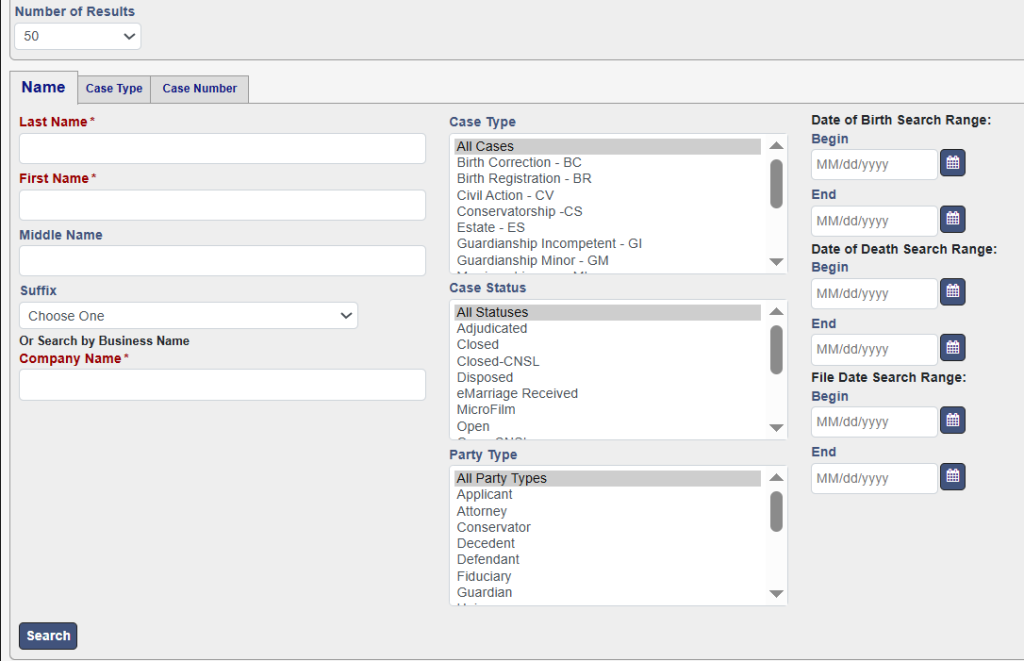
Visit the official Clermont County Clerk of Courts probate search system using the link above. The homepage displays different search options such as name search, case type, and case number search.
Select Search Method
Choose one of the available search tabs based on available information:
- Name Search → Best option when only a person’s name is known
- Case Number Search → Fastest and most accurate method
- Case Type Search → Helps filter records like estates or guardianships
Enter Case Details
For name-based search:
- Enter Last Name first
- Then enter First Name
- Use correct spelling for better results
For case number search:
- Enter full case number exactly as recorded
Apply Filters (Optional)
Users can refine results using:
- Case Type (Estate, Guardianship Minor, Civil Action)
- Case Status (Open, Closed, All Statuses)
- Date Filters (if case timeframe is known)
For juvenile-related guardianship records, selecting “Guardianship Minor (GM)” may show limited related filings.
Run the Search
Click the Search button to display matching records. If results are available, the system will show:
- Case number
- Party names
- Case type
- Filing date
- Basic case status
Open Case Details
Select a case number from the results list to view available public information. Details may include docket entries and filing summaries, depending on record type.
Important Limitations
This system does not provide full juvenile court records. Many juvenile cases are restricted under Ohio law and may not appear in online searches.
Common restrictions include:
- Juvenile delinquency cases
- Child protection matters
- Sealed or confidential records
- Sensitive family court proceedings
Full juvenile case files are usually only available through court offices or authorized access.
Types of Juvenile Court Cases in Clermont County
Clermont County Juvenile Court handles a wide range of juvenile court cases involving minors, focusing on accountability, protection, and corrective support. These cases include criminal-like behavior, family welfare matters, and non-criminal violations tied to youth conduct. Each case type is reviewed based on its circumstances, evidence, and the minor’s background. The court places strong attention on rehabilitation, safety, and structured intervention programs to support long-term behavioral improvement and family stability.
Delinquency Cases
Delinquency cases involve juvenile delinquency where minors are accused of actions that would be considered criminal offenses if committed by adults. These youth offenses may include theft, vandalism, assault, and drug-related violations. The court evaluates the severity of the act along with school records, home environment, and prior behavior before making decisions. In most situations, the court focuses on corrective measures such as counseling, probation, and structured supervision instead of strict punishment. The goal remains centered on reducing repeat offenses and encouraging responsible behavior through rehabilitation-based programs.
Child Protection & Dependency Cases
Child protection and dependency cases involve situations where a minor’s safety or proper care is in question. These child protection cases often arise from neglect, abuse allegations, or lack of stable parental support, leading to dependency matters being reviewed by the court. In such situations, state agencies may step in to investigate and provide necessary intervention. The court may also evaluate family conditions and decide whether a child should remain at home or be placed in temporary foster care. These proceedings aim to secure safe living conditions and improve long-term family stability.
Unruly & Status Offenses
Unruly and status offense cases involve behaviors that are only considered violations because the individual is underage. These include truancy cases, curfew violations, running away from home, and other status offenses linked to school or home conduct. Although these actions are not criminal in nature, they still require court attention when patterns of behavior affect safety or discipline. The court often reviews school reports, family circumstances, and behavioral history before deciding appropriate interventions. These may include supervision plans or counseling focused on improving responsibility and daily structure.
Juvenile Traffic & Minor Legal Violations
Juvenile traffic and minor legal violations involve offenses committed by minors while operating vehicles or engaging in public conduct regulated by law. These juvenile traffic cases may include driving without a license, traffic signal violations, or other minor legal violations related to road safety rules. The court reviews each incident based on risk level, prior record, and driving behavior. Instead of severe penalties, the court often assigns driver education programs, safety training, or restricted driving privileges. These measures aim to build responsible driving habits and reduce future violations among young drivers.
How Juvenile Hearings Are Conducted
Juvenile hearings in Clermont County follow a structured legal process focused on fairness, privacy, and the rehabilitation of minors involved in juvenile hearings and court hearings for minors. These hearings are less formal than adult court proceedings, yet they still follow strict legal rules and procedures. A judge reviews case details, listens to statements from involved parties, and examines reports prepared by court officers. In some situations, judges may also consider family circumstances connected to marriage & divorce records, particularly when parental relationships, custody arrangements, or household conditions affect the minor’s well-being. Each hearing focuses on facts, behavioral history, and family background to reach balanced decisions that support both accountability and correction for the minor.
Closed Court Proceedings
Closed court proceedings are a standard part of juvenile hearings, meaning the public cannot attend or observe the case. This confidentiality protects the identity and future of minors involved in sensitive matters. Only authorized participants such as the judge, attorneys, probation officers, and parents or guardians are allowed inside the courtroom. The private setting allows the court to review facts without outside influence and helps minors speak more openly during the process. This structure supports fair evaluation while maintaining privacy and reducing long-term impact on the minor’s record.
Rights of Juveniles
Juveniles involved in court hearings are provided with specific legal rights to ensure fairness throughout the process. They have the right to be informed of charges, the right to legal representation, and the right to present their side of the case during hearings. The court also protects them from unfair questioning and ensures proper procedure is followed. These rights help maintain balance in the justice process and prevent misuse of authority. The system is designed to ensure that decisions are based on verified facts, not assumptions or incomplete information.
Role of Parents, Guardians, and Probation Officers
Parents or guardians play a direct role in juvenile hearings by attending sessions and supporting the minor during court proceedings. They often participate in discussions related to behavior correction, supervision plans, and rehabilitation programs. Probation officers also provide detailed reports to the judge, covering school performance, home environment, and behavioral history. These reports help the court understand the minor’s background more clearly. Together, the judge, family members, attorneys, and probation officers contribute to decisions that focus on accountability, structured guidance, and long-term behavioral improvement.
Rights of Minors in Clermont County Juvenile Court
Minors appearing in Clermont County Juvenile Court are protected through strong juvenile rights and legal rights of minors that ensure fair treatment at every stage of the legal process. These rights apply from the initial filing of the case to the final court decision. The court follows structured procedures so that every minor is treated fairly and decisions are based on verified facts and evidence. These protections help maintain balance in proceedings while considering the minor’s age, background, and circumstances before any ruling is made.
Key protections include:
- Fair treatment throughout court proceedings
- Protection from unfair or biased decisions
- Right to present personal side of the case
- Review based on evidence and facts only
Right to Attorney
One of the strongest defense rights in juvenile court is the right to legal representation. Every minor has the right to an attorney who can explain the legal process, prepare a defense, and represent them during hearings. If a family cannot afford a lawyer, the court may assign a public defender to handle the case. The attorney plays an important role by reviewing evidence, speaking in court, and ensuring that the minor’s rights are protected during every stage of the hearing process.
Key points include:
- Right to hire or be assigned an attorney
- Legal support during hearings and questioning
- Case review and evidence evaluation
- Protection against legal errors or unfair treatment
Due Process Rights
Due process rights ensure that every minor receives fair treatment under the law during juvenile court proceedings. These due process rights require that the court inform the minor of all charges, allow them to respond, and provide a fair hearing before any decision is made. Judges must follow proper legal steps, and rulings must be based on clear evidence. This system ensures fairness in all juvenile rights cases and prevents decisions from being made without proper review or legal justification.
- Right to know all charges clearly
- Opportunity to respond in court
- Fair hearing before judgment
- Decisions based on verified evidence
Confidentiality Protections
Confidentiality protections play an important role in safeguarding minors involved in juvenile court cases. These protections ensure that court records, hearings, and personal details are not publicly accessible in most situations. Only authorized persons such as judges, attorneys, probation officers, and parents or guardians can review case information. This privacy system helps protect the minor’s future and prevents unnecessary public exposure. It also supports rehabilitation by allowing minors to participate in court proceedings without long-term harm to their reputation.
Key points include:
- Restricted access to court records
- Protection of personal identity and case details
- Access limited to authorized court personnel
- Support for privacy and rehabilitation goals
Rehabilitation and Sentencing in Juvenile Cases
Clermont County Juvenile Court focuses on juvenile rehabilitation, juvenile sentencing, and structured youth correction programs that aim to correct behavior rather than impose harsh punishment. The court evaluates each case based on the minor’s age, background, and offense type before deciding the most suitable outcome. Sentencing is designed to support learning, accountability, and long-term behavioral improvement. The goal is to reduce repeat offenses while helping minors reintegrate into school, family life, and community through supervised correctional support and guidance programs.
Probation Programs
Probation programs are one of the most common outcomes in juvenile sentencing, allowing minors to remain in their community under structured supervision. These probation programs require regular check-ins with a probation officer who monitors behavior, school attendance, and compliance with court rules. The court may set specific conditions such as attending school regularly, avoiding certain peers, or following curfew rules. This approach helps minors stay connected to their environment while still receiving correctional oversight and accountability through consistent monitoring.
Key elements include:
- Regular reporting to probation officers
- School attendance and behavior monitoring
- Curfew and activity restrictions
- Compliance with court-ordered conditions
Counseling Programs
Counseling programs are widely used in juvenile rehabilitation to address emotional, behavioral, or social issues that may contribute to delinquent behavior. These counseling programs may include individual therapy, group sessions, or family counseling depending on the case. The court often recommends counseling to help minors understand the impact of their actions and develop healthier decision-making skills. This approach supports emotional stability and helps reduce the chances of future offenses by addressing root behavioral causes rather than only focusing on punishment.
Key elements include:
- Individual behavioral therapy
- Family counseling sessions
- Group rehabilitation sessions
- Focus on emotional and behavioral improvement
Diversion Programs
Diversion programs are designed to keep minors away from formal court sentencing while still holding them accountable for their actions. These diversion programs are typically offered for first-time or low-level offenses and focus on education and corrective behavior. Instead of formal penalties, minors may be required to complete community service, attend educational workshops, or participate in structured behavior improvement plans. Successful completion often results in reduced charges or case dismissal, helping minors avoid long-term records while encouraging responsible future behavior.
Frequently Asked Questions
Below are detailed answers to common questions about Clermont County Juvenile Court Cases, the youth court system, and juvenile records Clermont County. Each response explains procedures, privacy rules, and court practices in a clear and informative way for better user understanding.
What types of cases are handled in Clermont County Juvenile Court?
Clermont County Juvenile Court handles a wide range of matters involving minors under the Clermont County Juvenile Court Cases system. These include delinquency cases, child protection matters, custody disputes, unruly behavior cases, and other family-related legal issues involving minors. The court also reviews situations where children require supervision, intervention, or rehabilitation support. Each case is handled based on the minor’s circumstances, safety concerns, and legal responsibility, with a strong focus on corrective measures and long-term behavioral improvement rather than strict punishment.
Are juvenile records public in Ohio?
Most juvenile records in Clermont County are not public under Ohio law due to strict confidentiality protections. The youth court system is designed to protect minors from long-term harm caused by public exposure of sensitive legal issues. Only authorized individuals such as parents, legal guardians, attorneys, probation officers, and court officials can access full case details. In some situations, limited or redacted information may be available, but full records are generally restricted to maintain privacy and support rehabilitation goals for minors involved in court proceedings.
How long do juvenile cases stay on record?
The length of time juvenile cases remain on record in the youth court system depends on the nature and severity of the case. Some minor offenses may be sealed automatically after the individual reaches adulthood, while more serious cases may remain accessible for a longer period. In many situations, eligible individuals can apply for record sealing or expungement to remove or restrict access to their juvenile history. The court evaluates each request based on case outcome, compliance with court orders, and rehabilitation progress.
Can juvenile records be expunged?
Yes, many juvenile records in Ohio can be expunged if specific eligibility requirements are met. Expungement in Clermont County Juvenile Court Cases means the record is either sealed or removed from public access, helping individuals avoid long-term consequences related to past behavior. The court considers factors such as the type of offense, the age of the minor at the time of the incident, completion of probation or counseling programs, and overall conduct after the case. Once approved, the record is no longer visible in most background checks.
What happens during a juvenile hearing?
During a juvenile hearing, the court reviews all evidence related to the case and evaluates reports from probation officers, attorneys, and other involved parties. The judge listens to statements, examines documentation, and determines appropriate outcomes based on facts and legal standards. The process is private and part of the juvenile court cases system, focusing on fairness and rehabilitation. Depending on the case, the court may assign counseling, probation, diversion programs, or other corrective measures aimed at improving behavior and supporting long-term development.